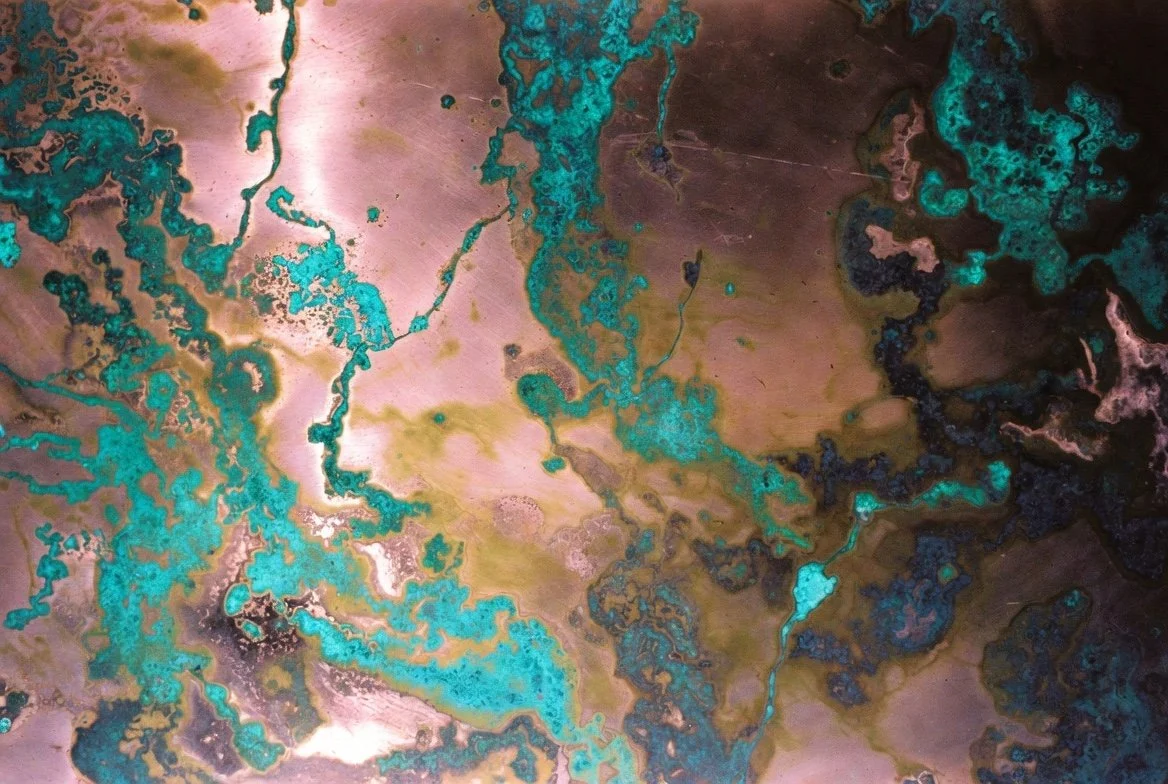
In the repair shop an inherited object sits on the bench — third generation of the same family. The housing carries two layers of lacquer, a solder joint newer than the rest, and a worn edge no moodboard decided. Time was the author; hands were the tools. That is exactly what gets confused with distress theatre: artificially aged surfaces that fake history no one lived.
Rosner and colleagues (2013) introduce the analytic category material traces for HCI: traces concretize a unique location in time and space and reveal the dynamic, evocative nature of form. Traces of skill, use, and time carry emotional resonance and pragmatic goals. Their pedagogical frame uses three lenses — attributes, entanglements, trajectories — to read particularities of form, entwinements of people, environments, and substances, and temporal patterns of breakage, wear, and decay (Rosner et al., 2013). Patina here is not a style filter; it is readable interaction history.
Giaccardi and colleagues (2014) shift to everyday products: they outline a design process for interactive media products that lets a patina of deliberate material traces grow on objects of daily use. Central is which traces people perceive as «acceptable» — and the claim that objects whose traces feel intrinsic to the material are more likely to be kept longer and become meaningful over time. Some materials «degrade»; others «mature» (Giaccardi et al., 2014). The difference from mere distress theatre sits exactly here: maturation through use versus simulated age without use.
Lee and Nam (2016) open the same thought for the digital: guided tours and interviews with 22 people at home compare emotional impacts of material and digital traces along aesthetic appearance, historicity, and authenticity. The question is whether digital artifacts with digital traces can improve rather than deteriorate with age — as a path toward more enduring human–artifact relationships. Design opportunities aim to surface latent values of digital traces and treat them as a design resource (Lee & Nam, 2016).
Odom and colleagues (2009) ask why we preserve some things passionately and discard others without thought. From personal inventories in 32 households they cluster four relationships tied to high attachment strength: engagement (physical involvement), histories (materials preserve personal history, often via signs of use), augmentation (reuse/modification), and perceived durability (Odom et al., 2009). Digital things often appear «unensouled» in their reading — precisely where material traces and histories are thin.
Lightly, and clearly distinct from essays on imperfect texture (Pallasmaa/Ingold): Saito (2017) argues that the aesthetic appeal of perfection often overshadows the value of imperfect objects — with social and environmental costs — while warning against celebrating imperfection indiscriminately where negative aesthetics calls for corrective action (Saito, 2017). For this essay: patina is not a free pass for every scratch; it is a use-trace with legibility, not romanticized defect styling.
First: patina is use — attributes, entanglements, trajectories, maturation, historicity. Second: distress theatre without lived use is cosmetics; it builds neither attachment nor acceptability. Between them sits the design question: Which traces do we let grow — and which do we only fake?